

The Complete Process for Solo Developers to Build Profitable Apps
Learn the proven 5-step process from idea validation to monetization. Discover how solo developers build profitable SaaS apps with AI-powered tools.
The Complete Picture Is Missing
You have an idea for an app. You know AI tools can help you build it. But something's missing—the complete picture.
Most solo developers struggle with these questions:
- Which idea should I actually build?
- How do I validate it before spending months coding?
- What's the fastest path from idea to paying customers?
- Which steps can I skip, and which are absolutely critical?
Without a clear end-to-end process, you risk building something nobody wants or getting stuck halfway through development. The good news? There's a proven 5-step framework that takes you from idea to revenue.
This article reveals the complete process solo developers use to build profitable apps—and how AI tools transform each stage from weeks of work into days.
Step 1: Generate and Select Ideas with AI

The first step isn't just "have an idea." It's systematically generating and evaluating multiple ideas to find the one worth building.
Why You Need 50 Ideas, Not Just One
Most failed products start with a single idea that the founder fell in love with—without validation. Successful solo developers do the opposite: they generate dozens of potential SaaS ideas and systematically narrow them down.
Here's the process:
- Brainstorm with AI: Use ChatGPT or Claude to generate 50 SaaS ideas in your domain of interest
- Apply Filters: Eliminate ideas that are too complex, too competitive, or too niche
- Identify Market Gaps: Look for problems with existing demand but inadequate solutions
- Check Your Capabilities: Can you actually build this with available tools and skills?
The AI Advantage
With AI, this entire ideation process takes hours instead of weeks. Prompt engineering becomes your superpower:
"Generate 50 SaaS ideas for [your target market] that solve [type of problem].
For each idea, include: problem statement, target audience, and potential monetization."
What Makes a Good Solo Developer Idea?
Prioritize ideas that have:
- Clear value proposition: Solves a painful problem
- Built-in distribution: Target audience is easy to reach
- Simple MVP: Core functionality can be built quickly
- Monetization clarity: Obvious path to revenue
The best ideas aren't necessarily the most innovative—they're the ones you can validate quickly and execute efficiently.
Step 2: Validate with Smoke Tests Before Building
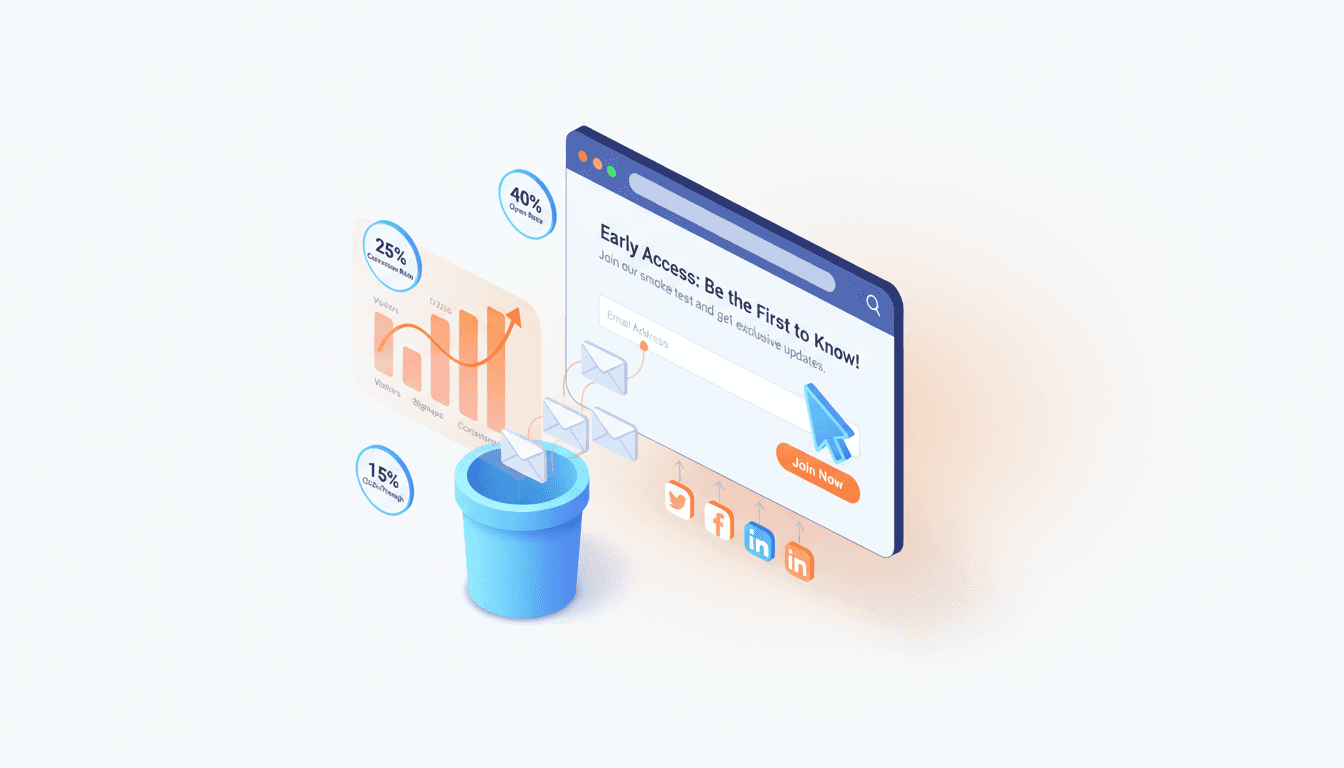
Before writing a single line of code, successful solo developers validate market demand. This crucial step prevents months of wasted effort.
What Is a Smoke Test?
A smoke test is a fake door experiment: you create the appearance of a product without actually building it, then measure if people are willing to pay. This typically involves:
- Landing Page: Compelling description of your solution
- Pricing Page: Clear pricing tiers (even though the product doesn't exist yet)
- CTA Button: "Start Free Trial" or "Get Early Access"
- Email Capture: Collect emails from interested users
How to Run a Smoke Test
Week 1: Build the Landing Page
- Use AI to write compelling copy
- Create mockup screenshots of key features
- Design a clear value proposition
- Set up email collection (Mailchimp, ConvertKit)
Week 2: Drive Targeted Traffic
- Reddit: Post in relevant communities
- Twitter: Share with relevant hashtags
- Facebook Groups: Engage with your target audience
- Google Ads: Small budget ($50-100) for keyword testing
Week 3: Analyze Results
- Track click-through rates on CTA buttons
- Measure email signup conversion
- Read user feedback and questions
- Calculate cost per interested user
What Success Looks Like
Good validation metrics:
- 5-10% email signup rate from landing page visitors
- Specific questions about features and pricing
- Requests for early access or beta invitations
- Low cost per signup (under $5)
If these numbers look good, you have validation. If not, pivot to a different idea from your Step 1 list rather than building something nobody wants.
The Vooster Advantage
Instead of manually creating validation materials, Vooster AI's PRD Wizard helps you systematically define your product concept, target market, and value proposition—creating professional artifacts you can use directly in smoke tests.
Step 3: Create a PRD with AI PM
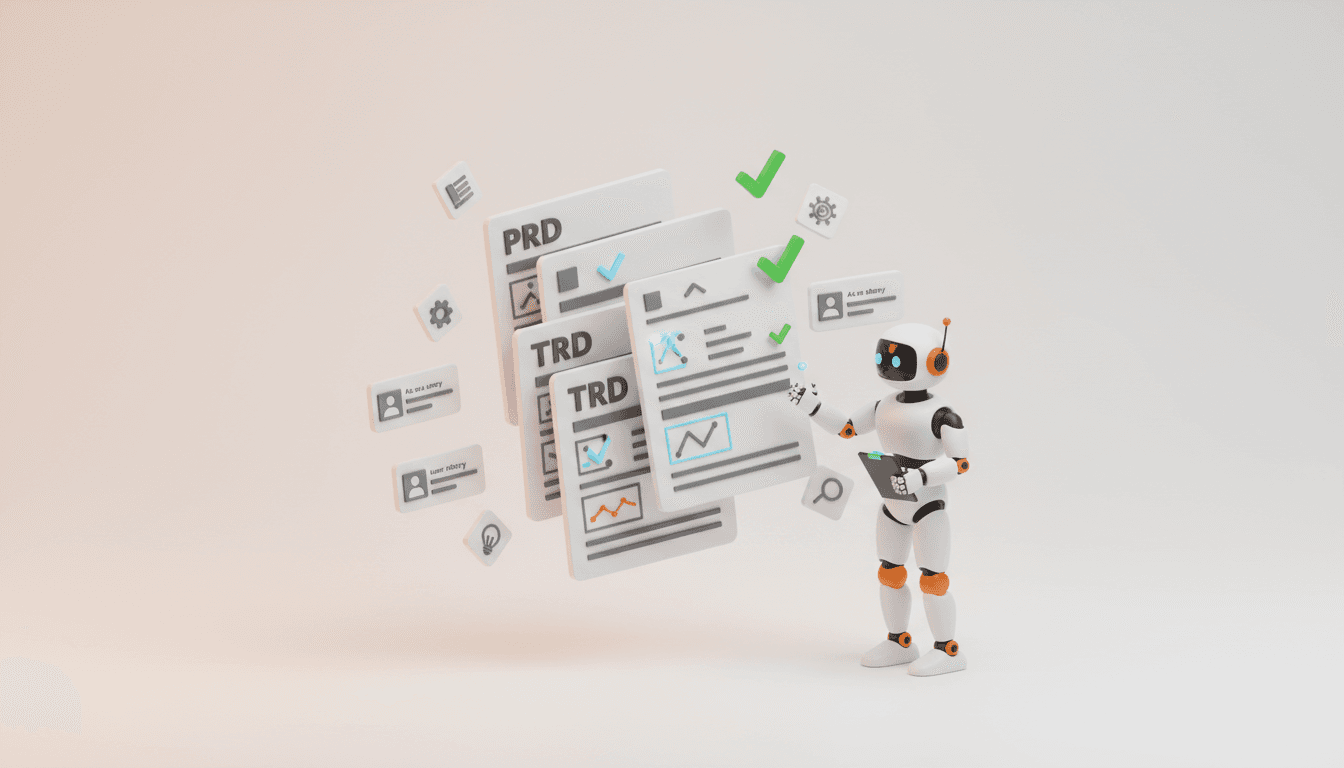
Once validated, don't jump straight to coding. Successful solo developers create a Product Requirements Document (PRD) first—and AI makes this incredibly efficient.
Why PRDs Matter for Solo Developers
A good PRD serves as your single source of truth throughout development:
- Scope Definition: Exactly what you're building (and what you're NOT)
- Priority Clarity: Which features are MVP vs. nice-to-have
- Decision Record: Why you made specific architectural choices
- AI Context: Perfect reference material for coding agents
Without a PRD, you'll face:
- Constant scope creep
- Unclear priorities
- Inconsistent implementation
- Wasted AI tokens on repeated explanations
What Goes in a Solo Developer PRD?
Your PRD should include:
-
Product Overview
- Problem statement
- Target users
- Success metrics
-
Core Features (MVP Only)
- User stories
- Acceptance criteria
- Priority ranking
-
Technical Constraints
- Tech stack decisions
- Third-party integrations
- Deployment requirements
-
Non-Functional Requirements
- Performance expectations
- Security considerations
- Scalability limits
The Traditional Way vs. AI Way
Traditional Approach:
- Research PRD templates (2 hours)
- Write requirements (8-10 hours)
- Review and refine (3-4 hours)
- Total: 15+ hours
AI-Powered Approach:
- Conversation with AI PM (30 minutes)
- Review generated PRD (30 minutes)
- Refine specific sections (1 hour)
- Total: 2 hours
How Vooster AI Transforms PRD Creation
Vooster AI's PM agent specializes in turning rough ideas into professional PRDs through conversation:
- Guided Questions: AI asks strategic questions about your vision
- Automatic Structure: Converts your answers into proper PRD format
- Best Practice Integration: Includes industry-standard sections you might miss
- Task Decomposition: Automatically generates implementation tasks from requirements
Plus, Vooster creates 7 essential documents beyond the PRD:
- Technical Requirements Document (TRD)
- Entity-Relationship Diagram (ERD)
- Design Guidelines
- Information Architecture
- Code Guidelines
- API Specifications
These documents become your complete blueprint for development, ensuring AI coding tools have perfect context for every task.
Step 4: Build MVP Fast with Templates
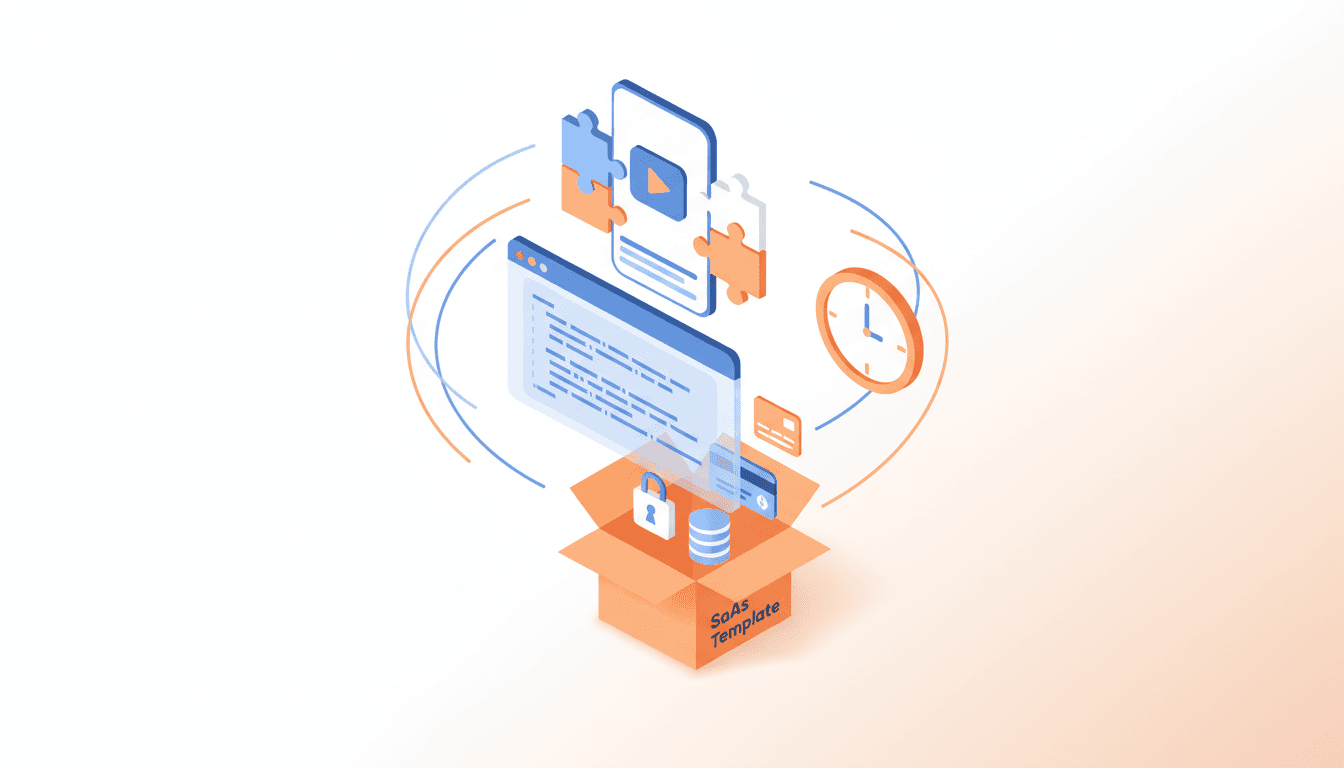
With your PRD ready, it's time to build. The fastest path to a working MVP is starting with a template that includes common SaaS infrastructure.
Why Templates Accelerate Development
Building from scratch means implementing:
- Authentication system (2-3 days)
- Database setup and ORM (1-2 days)
- Payment integration (2-3 days)
- Email service (1 day)
- Admin dashboard (2-3 days)
- Deployment configuration (1-2 days)
Total: 10-15 days of foundational work before you even start on your unique features.
Templates give you all of this on day one.
What to Look for in a SaaS Template
Essential features every template should include:
Authentication & User Management
- Email/password signup
- Social login (Google, GitHub)
- Email verification
- Password reset flow
Payment & Subscriptions
- Stripe integration
- Multiple pricing tiers
- Subscription management
- Billing portal
Core Infrastructure
- Database schema and migrations
- API routes structure
- Admin panel
- Email templates
Developer Experience
- TypeScript setup
- Testing framework
- CI/CD pipeline
- Environment configuration
Popular Template Options
Open Source:
- Next.js SaaS Starter (free)
- Shipfast ($199)
- SaaS UI ($499)
Vooster AI Advantage: Vooster's FullSaaS template goes beyond typical templates by including:
- Pre-configured payment system with Stripe
- AI-optimized code structure that works seamlessly with Cursor/Claude
- Automatic task integration from your PRD
- Built-in best practices from successful SaaS products
The AI-Powered Development Workflow
- Start with Template: Fork Vooster FullSaaS template
- Load PRD Context: Import your requirements into AI coding tool
- Implement by Task: Work through prioritized task list
- Iterate with AI: Refine features through conversation
- Test Continuously: Validate each feature before moving forward
From Template to Unique Product
Here's the secret: your unique value isn't in authentication or payments—it's in the core problem you solve. Templates handle the commodity features, letting you focus 100% of your effort on what makes your product special.
Typical timeline with templates:
- Days 1-2: Customize template for your brand
- Days 3-10: Implement unique core features
- Days 11-12: Polish and bug fixes
- Day 13-14: Deploy and test
Total: 2 weeks to working MVP instead of 2-3 months.
Step 5: Deploy and Monetize with Stripe
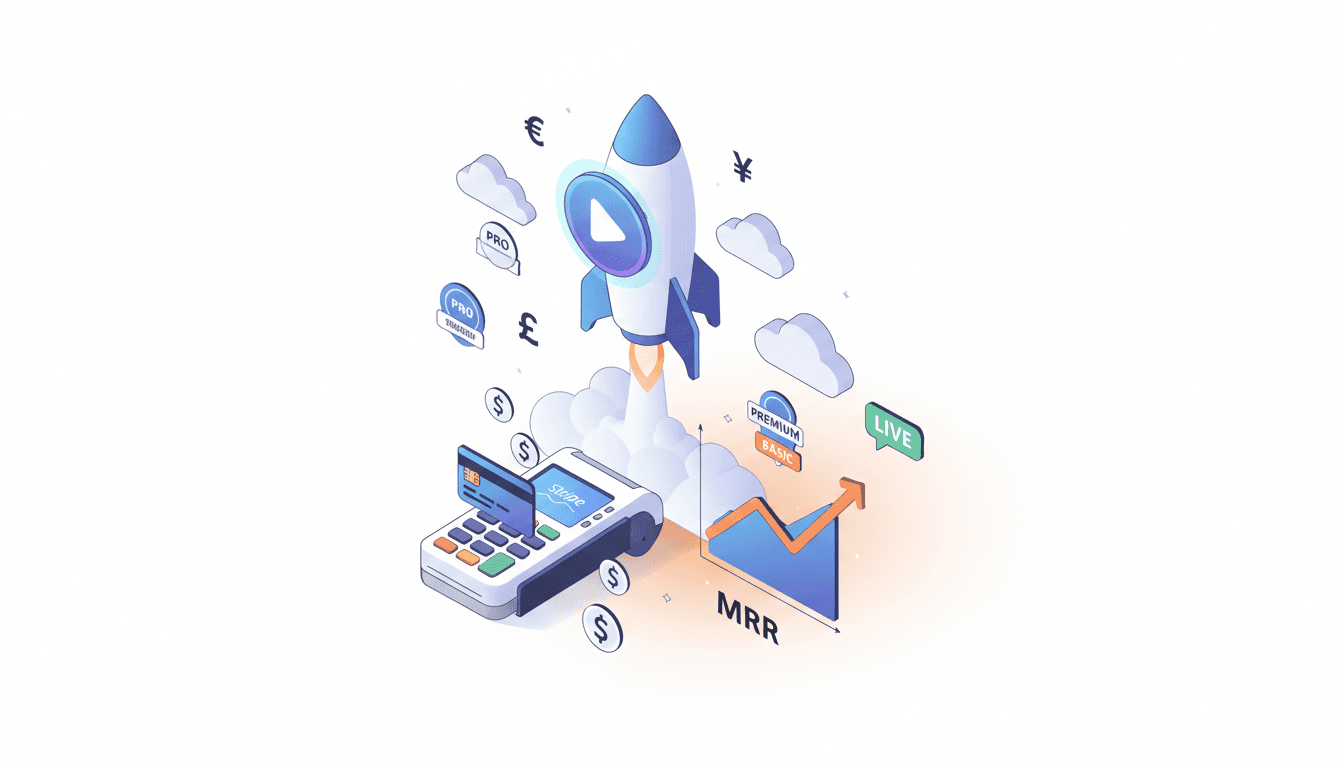
The final step transforms your MVP from a project into a profitable business. This involves deployment, payment integration, and your first marketing push.
Deployment Essentials
Choose Your Platform:
- Vercel: Perfect for Next.js apps, zero-config deployment
- Railway/Render: Great for full-stack apps with databases
- AWS/Digital Ocean: Maximum control, steeper learning curve
Deployment Checklist:
- Environment variables configured
- Database migrations run
- SSL certificate active
- Custom domain connected
- Error monitoring setup (Sentry)
- Analytics installed (PostHog, Google Analytics)
Stripe Integration for Instant Monetization
Why Stripe?
- Handles complex subscription logic
- PCI compliance built-in
- Customer portal included
- Extensive documentation
Essential Stripe Setup:
-
Create Products and Prices
- Define pricing tiers
- Set up recurring subscriptions
- Add one-time payment options
-
Implement Checkout Flow
- Stripe Checkout (easiest)
- Stripe Elements (customizable)
- Payment Links (no code)
-
Handle Webhooks
- Subscription created
- Payment succeeded
- Subscription cancelled
- Payment failed
-
Build Customer Portal
- Manage subscriptions
- Update payment methods
- View invoices
Launch Strategy for Solo Developers
Week 1: Soft Launch
- Share with validation email list
- Post in relevant Reddit communities
- Tweet progress thread
- Ask for feedback
Week 2-3: Product Hunt
- Prepare launch assets
- Build community support
- Launch on Tuesday/Wednesday
- Engage with comments all day
Week 4+: Content Marketing
- Write SEO-optimized blog posts
- Create YouTube tutorials
- Share case studies
- Build in public on Twitter
Measuring Success
Track these metrics from day one:
Acquisition:
- Visitors to signup conversion
- Traffic sources
- Cost per acquisition
Activation:
- Users completing onboarding
- Time to first value
- Feature adoption rate
Revenue:
- Free to paid conversion
- Monthly Recurring Revenue (MRR)
- Customer Lifetime Value (LTV)
- Churn rate
The First $1,000 MRR Milestone
Most solo developers reach their first $1,000 MRR within:
- 1-2 months with strong validation
- 3-4 months with moderate validation
- 6+ months with weak validation
This timeline reinforces why Step 2 (validation) is critical. Good validation dramatically accelerates your path to revenue.
From Idea to Profitable App in Weeks, Not Months
The complete process for solo developers to build profitable apps comes down to these 5 proven steps:
- Generate Ideas: AI brainstorming to create 50+ options
- Validate First: Smoke tests before writing code
- Document Thoroughly: PRD as your development blueprint
- Build Fast: Templates for infrastructure, AI for features
- Deploy and Monetize: Stripe integration and launch strategy
Why This Process Works
This framework succeeds because it:
- Validates before building (prevents wasted effort)
- Leverages AI at every step (multiplies your productivity)
- Uses proven templates (avoids reinventing the wheel)
- Focuses on revenue (from day one)
How Vooster AI Streamlines Every Step
Vooster AI is specifically designed for this exact workflow:
Step 1-2 Support:
- AI PRD Wizard helps refine and validate ideas
- Generates professional positioning documents
Step 3 Mastery:
- 4 AI team members (Leader, PM, Architect, Designer)
- 7 auto-generated documents (PRD, TRD, ERD, Design Guide, IA, Code Guidelines, API Specs)
- Conversation-based requirements gathering
Step 4 Acceleration:
- FullSaaS template with Stripe pre-integrated
- Automatic task decomposition from PRD
- MCP integration with Cursor for seamless coding
- Kanban and workflow boards for progress tracking
Step 5 Foundation:
- Payment system already configured
- Deployment-ready architecture
- Best practices built-in
Your Competitive Advantage
In 2025, knowing the complete process is your competitive advantage. While other developers waste months building unvalidated ideas or get stuck in analysis paralysis, you can systematically move from idea to revenue in weeks.
The solo developers who succeed aren't necessarily the best coders—they're the ones who understand and execute this complete process efficiently.
Ready to build your profitable app with this proven framework? Start your systematic development journey with Vooster AI today!
Start Structured Vibe Coding with Vooster
From PRD generation to technical design and task creation - AI helps you every step. Start free today.
PRD Generation
Auto-generate detailed requirements
Technical Design
Implementation plan & architecture
Task Generation
Auto-break down & manage dev tasks
No credit card required · Full access to all features
Related Posts
How to Build Profitable Software Solo (No Employees, No Capital)
Learn how to build profitable SaaS products as a solo developer with no employees and minimal capital using the right tools and strategies.
6 Levels of Building PROFITABLE Software (Beginner to God Mode)
Learn the 6 levels of building profitable software, from hiring developers to AI agent collaboration. Find your level and start earning with vibe coding.

5 Steps to Launch Your SaaS with Vibe Coding
Learn the proven 5-step framework to build and launch your SaaS product using vibe coding. From idea validation to deployment, master every essential phase.