
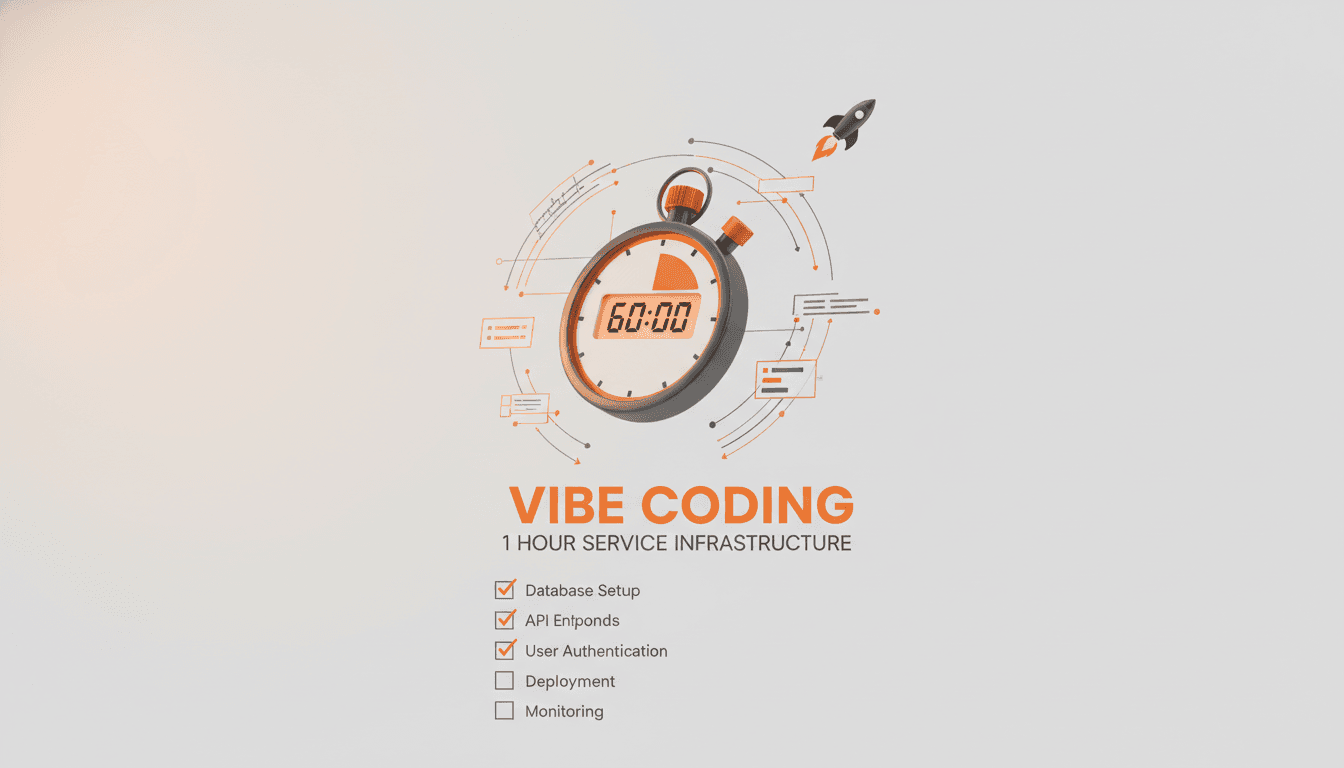
Building a Service Foundation in 1 Hour - Real-World Vibe Coding
Learn how proper architecture and AI-powered planning can help you build a complete service foundation in just 60 minutes with vibe coding.
Introduction
"Can I really build a service in one hour?" This is a question many developers ask themselves. Especially for those starting side projects or aspiring entrepreneurs who need quick MVP validation, this is a very real concern.
Here's an actual live coding session. Project creation time: 8:12 AM. Target completion: 9:12 AM. Exactly 60 minutes to take an idea and build a service foundation. It looks like a race against time, but surprisingly, the most important factor in this challenge was not speed, but the systematization of initial setup.
What was the secret to implementing complex requirements without falling into error hell? In this article, we'll explore the entire process of building a service foundation in one hour through a real live vibe coding session, and why architecture is the key to fast development.
0-20 Minutes: Spec Decision and Scaffolding Are 80% of Success
60 minutes of live coding, and the first 20 minutes? Not a single line of code was written. But these 20 minutes determined the success of the remaining 40 minutes.
0-10 Minutes: Project Analysis and MVP Spec Decision
The first task was feasibility assessment. Is it technically possible? Are there any legal issues? Can it provide meaningful value in the market? After quickly reviewing from these three perspectives, we decided on the core MVP specs.
For example, among the originally requested features, the complex document editing function was simplified to markdown format, and instead of developing a proprietary LLM, we decided on API integration. We focused on minimal viable features rather than perfect functionality.
10-20 Minutes: Scaffolding and Environment Setup
We created the project using the EasyNext template. Why use a template? Because necessary libraries are already installed, and the directory structure and coding rules are preconfigured.
Common problems developers face at the beginning of projects:
- "Which state management library should I use?"
- "How should I structure the folders?"
- "How do I configure ESLint?"
Instead of spending time on these decisions, starting with a proven template allows you to immediately focus on implementing business logic. EasyNext includes everything needed for modern Next.js development: date-fns, ts-pattern, @tanstack/react-query, zustand, and shadcn-ui.
20-45 Minutes: AI Generates Documents, Humans Validate Architecture
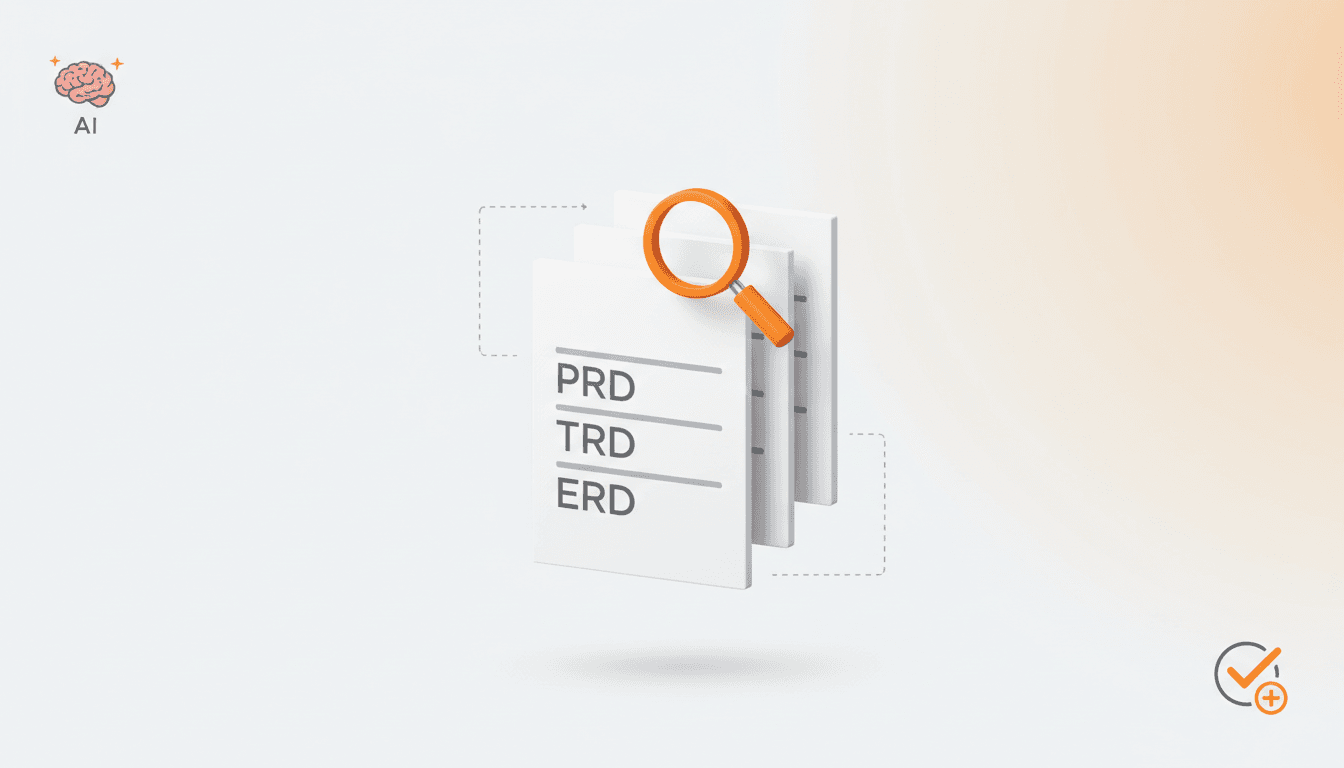
Before writing code, we spent 25 minutes from minute 20 to 45 creating documents. "Isn't that a waste of time on documentation?" you might think, but this was precisely the key to avoiding error hell.
20-35 Minutes: PRD/TRD Generation and Review
We generated a PRD (Product Requirements Document) using Vooster AI. However, we didn't blindly follow the AI-generated content. We identified parts the AI misunderstood and immediately requested corrections.
Next, we generated a TRD (Technical Requirements Document). What's important here is that the architecture was specified. It documented what layers to build, what responsibilities each layer has, and how data will flow.
Finally, we generated code guidelines. This isn't just coding conventions. It clarified what patterns to use in this project and what principles to follow.
35-45 Minutes: Database Design
We generated data flow and schema using Claude Opus. But we went through one more validation step. We reviewed and cleansed the generated schema with Gemini.
Why so careful? Because the database schema is the hardest part to change later. We drew the ERD, reviewed relationships, and considered necessary indexes. These 10 minutes of design prevented dozens of future migrations.
45-60 Minutes: With Architecture, Implementation Is Fast

The remaining 15 minutes, finally time to write code. But the path had already been paved for 45 minutes.
CRUD API Implementation
We implemented CRUD APIs. But we didn't need to think about what endpoints were needed. They were already defined in the ERD. We didn't need to think about what data structures to use. The schema was clear.
Even implementing complex business logic resulted in few errors. Why? Because the architecture document clearly defined each layer's responsibilities. Controllers handle validation, services handle business logic, and repositories handle data access - the principles were clear.
Supabase Connection and Authentication Implementation
We connected Supabase and implemented Google login authentication. Because the TRD already specified "Use Supabase, prioritize Google for social login," we didn't need to spend time considering or comparing tech stacks.
When 60 minutes passed, what we completed wasn't simply "working code." It was a scalable foundation. The structure was solid enough that in the next live session, we could template this foundation work, skip it, and focus directly on feature implementation.
Conclusion: 80% of Vibe Coding Is Foundation Work
The biggest lesson from the 1-hour live coding is this: The success of vibe coding depends not on speed, but on the systematization of initial setup.
We spent 45 minutes on documentation and architecture design and only 15 minutes coding, but those 15 minutes of coding proceeded cleanly without errors. Conversely, if we had started coding without a system, we would have wasted all 60 minutes fixing errors, changing structure, and rewriting.
To succeed at vibe coding:
- Clarify MVP specs - Minimal viable features over perfect functionality
- Skip scaffolding with templates - Don't waste time choosing libraries and considering structure
- Generate documents with AI, but humans validate architecture - AI creates drafts quickly, but humans must judge structural validity
- Invest time in data design - It's the hardest part to change later
- Clear architecture makes implementation fast - Errors decrease when each layer's responsibilities are clear
Vooster AI automates exactly this process. When you create a project through conversation with AI agents, seven core documents are automatically generated: PRD, TRD, ERD, Code Guidelines, User Journey, Design Guide, and IA. Skip scaffolding with the EasyNext template, and utilize generated documents and tasks directly in your coding tools through MCP integration.
80% of vibe coding is foundation work. Quickly establish your foundation with Vooster AI and focus on implementing truly important features. Not in a 1-hour live coding session, but in your real projects.
Start your systematic vibe coding journey with Vooster AI today!
Start Structured Vibe Coding with Vooster
From PRD generation to technical design and task creation - AI helps you every step. Start free today.
PRD Generation
Auto-generate detailed requirements
Technical Design
Implementation plan & architecture
Task Generation
Auto-break down & manage dev tasks
No credit card required · Full access to all features
Related Posts
What is Vibe Coding? The Future of AI-Powered Development in 2025
Discover vibe coding: the revolutionary AI-powered development approach. Learn 3 essential rules, real success stories, and how to build better products faster.
Vibe Coding AI Model Selection Guide - When Should You Use Which Model?
Learn when to use premium AI models like Opus for critical tasks like database schema design, and how to optimize AI model selection for better results.
The Real Role of Developers in the AI Era: From Coding to Prompt Planning
AI writes code, but developers guide it. Learn the 3 core skills for AI-era developers: domain understanding, codebase knowledge, and prompt planning.